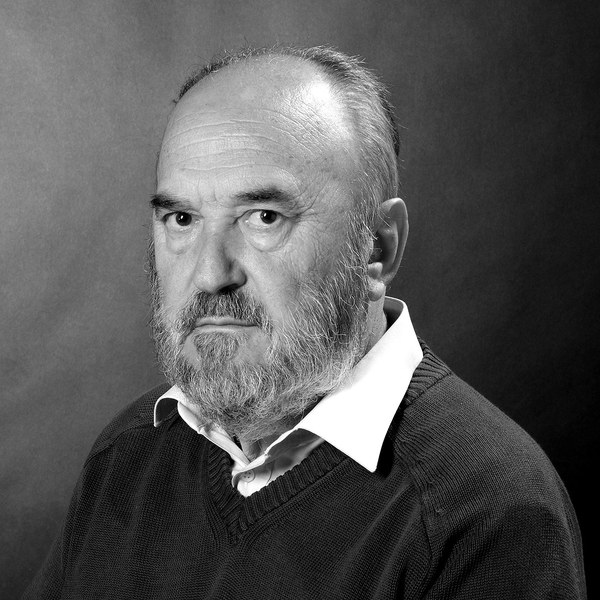
Paolo Maurizio (1943-2025)
Goldsmith and artist of the Padua SchoolPaolo Maurizio was among the main interpreters of the second generation of the Padua School, the experience that brought Italian designer jewelry to international recognition, transforming it from an ornamental object into an autonomous artistic language. In his work, contemporary jewelry becomes wearable sculpture: a research into form, color, and movement where geometric rigor and material experimentation coexist.
From his training at Selvatico to the Padua School
Trained at the Pietro Selvatico Art Institute and a student of Mario Pinton, Paolo Maurizio absorbed and reinterpreted the principles of the Paduan goldsmith school: the goldsmith coincides with the author of the work, technique is a tool of knowledge, and material is the primary interlocutor of the project. In the wake opened by Pinton, his research goldsmithing dialogues with programmed and kinetic art and with theories of visual perception.
Research on color: anodized titanium, niobium, and tantalum
Paolo Maurizio's most recognizable hallmark is his experimentation with refractory metals. Through anodic coloring, color is not applied to the surface but arises from the interaction between light and the metal's oxide: a stable, pigment-free chromacity that changes with the viewing angle. It is a luminous phenomenon that, in his research, is called photonic color, where color becomes design material and an integral part of the work's construction.
Kinetic jewelry and programmed articulation
Necklaces, brooches, and bracelets are created from modules joined using the technique of programmed articulation, linear or spiral. Kinetic jewelry changes with the movement of the body and the gaze: surfaces reflect light, modules transform during use, and the relationship with the wearer becomes part of the artwork. This results in a microarchitecture of the body where structural lightness and function coincide with artistic research.
Awards and collections
The consistency of this poetics is recognized internationally. In 1974, Paolo Maurizio received the Herbert Hofmann Award in Munich, one of the highest honors in contemporary jewelry. His works are now preserved in the permanent collections of the Pinakothek der Moderne in Munich and presented in major exhibitions dedicated to contemporary goldsmith art and the Padua School.
01Biographical note
He lives and works in Grancona (Vicenza) where he continues his research on materials and processing techniques and on the expressiveness of his works.